
What electronic components are needed for an autonomous GPS buoy?

Updated: Aug 20
The buoy is composed of components very similar to those found in a drone. We primarily selected M5Stack components for their modularity, rich functionality, and the quality of the software libraries used to control them.
Autonomous GPS buoys come in two levels:
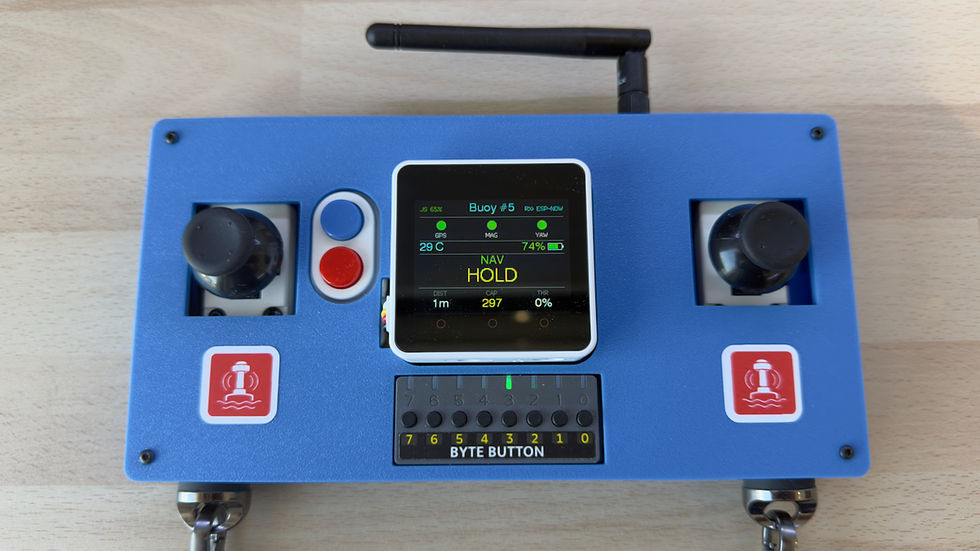
Standard buoy, controlled by a joystick (long-range LoRa protocol) for one to eight buoys, with local operation on the body of water
Advanced Buoy, controlled by a mobile phone application, requiring an internet connection for each buoy and a ground station, allowing for more advanced functionalities, such as regatta course management.
Our recommendation is to start with Standard Buoys. Upgrading to Advanced Buoys has little impact on the buoys themselves. However, it does require the installation of an additional ground station and an internet connection.
🔗 M5Stack Purchase Links — Please Use Them!
We have established an affiliate partnership with M5Stack. The price is exactly the same for you, but every purchase made through the links below gives us a small commission that helps fund the development of the project. It's a simple gesture at no extra cost to support the adventure!
Thank you for your support! 🙏
Components for a Standard Buoy
M5Stack Components - Heart of the Buoy
 | $42.90 | |
 | $6.95 | |
 | $45 | |
 | $15.5 | |
 | $19.5 | |
 | $13 | |
 | $1.95 | |
Subtotal Heart of Buoy | $145 |
Other Components
We've also teamed up with APISQUEEN for the motor side of things. When you place an order, just enter the code Philippe2026APISQUEEN at checkout: it sends a small commission our way that goes straight into funding the project, at no extra cost to you. A simple way to support the adventure — thanks so much! 🙏
 | $33.14 | |
 | 6 € | |
 | €7.98 | |
 | €7.99 | |
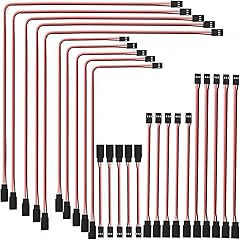 | €9.99 | |
 | €9 | |
2 * Stainless steel screws M4 - 22 mm | ||
Lipo or LiFe battery - 4S 4000 mAh |
Additional components for an Advanced Buoy
M5Stack Components - Heart of the Buoy
For an advanced buoy, the above component, the LoRaE220-920 unit, is no longer necessary and is replaced by the module below:
 | $36.90 | |
 | €15 |

Greatings from afar Many thanks for sharing your R&D and progress with these marvellous devices ! We are very keen to replicate them for our brand new DF95 fleet here in Dubai. When do you think the 3D printing files (and any guidance) might be available for sharing ?
Hello Robert, Do you have a website for your 3D printer activity ? It is not very easy to design a 3D printed cone to be put on top of the buoy. If you have an idea on how to do that, it could be interesting.
This is some amazing development. Congratulations! Will the software and STLs for printing be available for download? How do the buoys fair in stronger winds? Are the motors and batteries able to maintain them in place under 15 or 20 knot winds? How visible are they at a larger distance and with choppy waves? I'm concerned that increasing the volume above water for greater visibility will also increase drag making it harder for motors to keep them in place in stronger winds. Could the buoys be built with cheaper components from , e.g. the Stamp controller and Unit series accessories?